


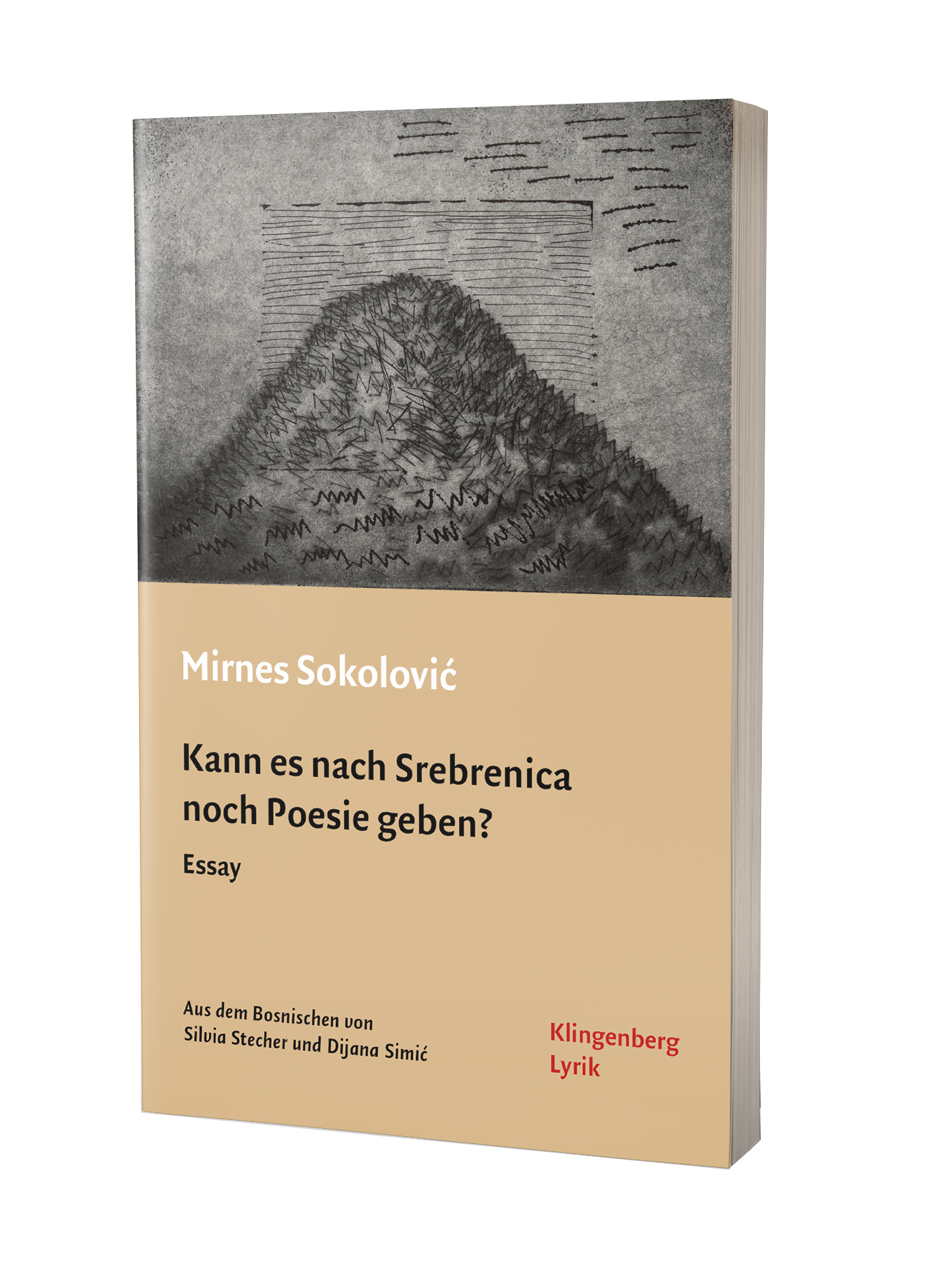
How can one write poetry when language is shattered and corrupted, horror is unspeakable, intellectualism has not only failed to prevent barbarism but has actually promoted it, and reality has caught up with the avant-garde's attacks on poetry? When their attempts to artistically dismantle values and conventions, to demystify poetry, to use humour, irony and wordplay, dream structures or liberation from meaning to dethrone it from the divine and free it from its lofty tone, are haunted by masses of murdered and traumatised people? In short: ‘Can there still be poetry after Srebrenica?’
Thirty years after the genocide of the Bosniaks, the Bosnian Muslims, during the Yugoslav Wars, author and literary critic Mirnes Sokolović, following Adorno's most frequently quoted line, ‘to write poetry after Auschwitz is barbaric,’ once again raises the question of the ethical and aesthetic connections between poetry — in this case Bosnian/Croatian/Montenegrin/Serbian poetry, whose paradigms he outlines from the avant-garde of the 1920s to contemporary poetry and relates to pan-European responses after 1945: In the face of the unspeakable and unimaginable, the only poetic strategy initially available was silence and stammering, breathing and gasping – or the absurd, whereby the question of ethics and aesthetics, meaning and meaninglessness, historical amnesia and historical consciousness recurs in specific ways.
Sokolović boldly pursues these ramified approaches, reflections and overlaps in his essay, highlighting both the genocide that culminated in Srebrenica in 1995 and Yugoslav and post-Yugoslav literary history, which is illustrated in this edition by text examples, some of which are available here in German translation for the first time. A book that touches the reader despite its abstract theoretical level.
Product Groups
More products of Verlag Klingenberg
Contacts

Contact
Verlag Klingenberg
Färbergasse 6
8010
Graz
Austria
Phone: 0043 316 232304
https://www.klingenbergverlag.at
Your Contacts